
Clicker training in five minutes a day
What a marker is, how to charge a clicker, and three first behaviours you can teach in short, five-minute sessions.
By the PackDay team. Checked against the sources listed at the end.
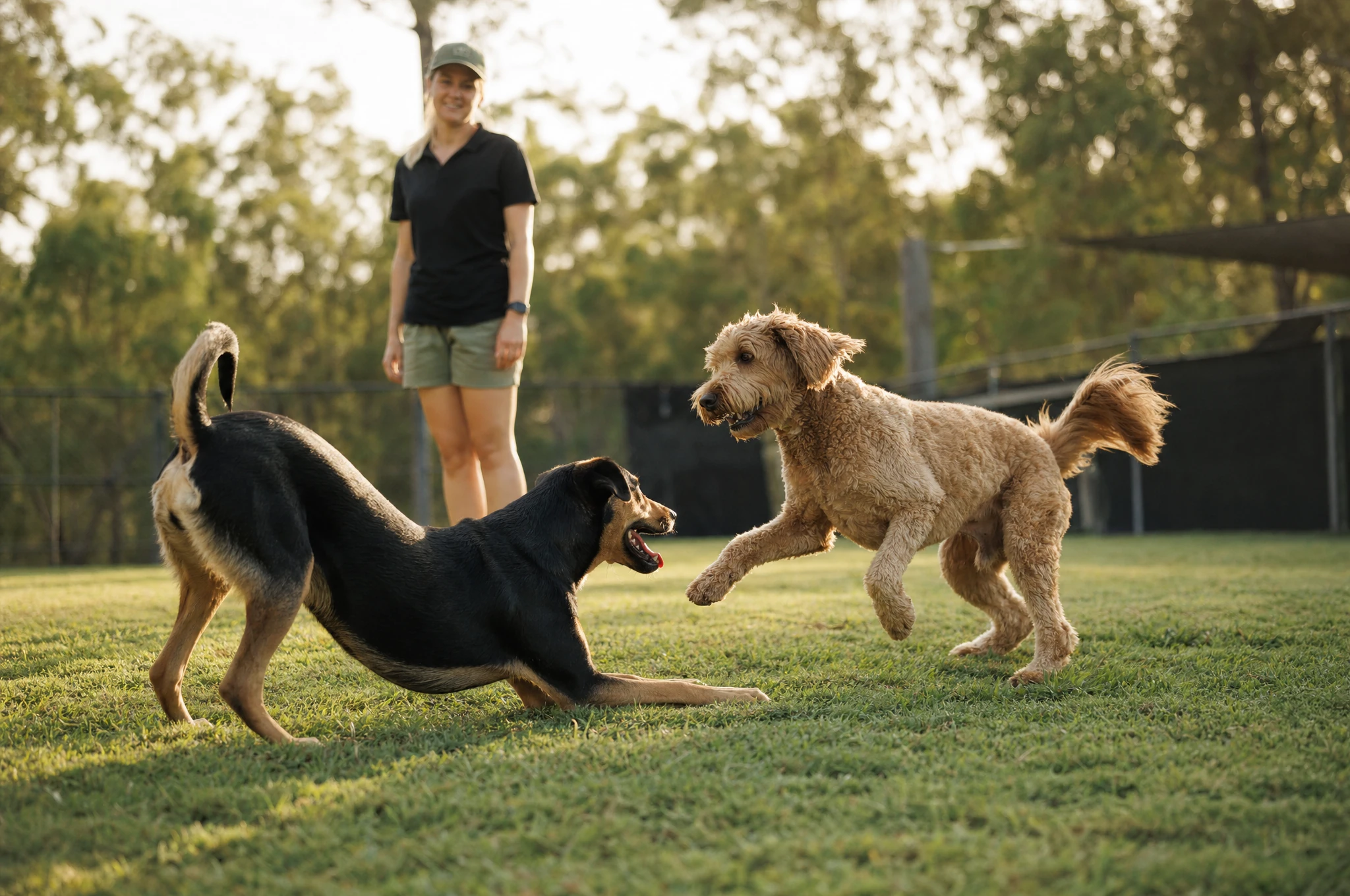
Most trouble in a playgroup gives a warning first. This guide shows daycare staff how to read healthy play, spot stress early and step in calmly before things go wrong.
No single signal tells you everything. A wagging tail can mean excitement or tension. A yawn can mean a tired dog or a worried one. Read the whole body, and read it in context: what just happened, who is nearby, how hot it is, how long the dog has been playing.
Start with one question: is this dog loose or stiff?
Healthy play looks bouncy, exaggerated and a little silly. Dogs make big, inefficient movements that they wouldn’t use if they meant business. When movement becomes fast, quiet and efficient, pay closer attention.
Play bows. The dog drops its front end with its bottom in the air. The RSPCA describes this as an invitation to play. A 2016 study of adult pet dogs found that they most often bowed after a brief pause in play, and almost always when their partner could see them. In other words, bows are often used to restart a game.
Role reversal. The chaser becomes the chased. The dog on top rolls underneath. In a study of play between pairs of dogs, Bauer and Smuts found role reversals happened during chases and tackles.
Self-handicapping. A bigger or stronger dog holds back: softer bites, slower running, lying down to let a smaller dog clamber on. The same study linked play signals with self-handicapping, suggesting the two work together to show playful intent.
Natural breaks. Good play has pauses. Dogs stop, sniff, shake off, then start again.
Play doesn’t have to be perfectly even. Bauer and Smuts found older or higher-ranking dogs usually did more of the chasing and pinning. A review by Bradshaw and colleagues notes that self-handicapping is not universal in dogs. What matters more is whether both dogs keep choosing to play.
Stress signals are often small and quick. They are also the earliest warning you’ll get. The RSPCA lists these signs that a dog may need space:
Other signs of a worried dog include a low body, ears back and a tail tucked under. A dog that suddenly freezes, or goes stiff and stares, is telling you something has changed. Freezing and looking away are also common ways dogs try to cut off play they aren’t enjoying.
Context still matters. Panting after a run on a warm Perth afternoon is normal. Panting in a cool room while another dog hovers nearby is worth a second look.
Vet and behaviourist Kendal Shepherd describes these signals as a ladder. The lower rungs are quiet, polite requests for space. The higher rungs are warnings and, finally, bites. Her version, published in teaching notes by the Association for the Study of Animal Behaviour, runs from bottom to top:
Shepherd’s key point: if the lower rungs don’t work, dogs are forced further up. Some learn to jump straight to the top just to be safe. This is why the RSPCA advises never punishing a growl. A growl is a warning, and a dog punished for warning may bite without one next time.
For daycare staff, the lesson is simple. Your job is to notice the bottom three or four rungs and act there.
Try this: at the start of each shift, pick one dog and watch it for two minutes without stepping in. Count how many stress signals you see. It trains your eye faster than any poster.
Step in early. A short break costs nothing. Waiting too long can cost a lot. Interrupt when you see:
When you’re not sure if both dogs are enjoying it, ask them. Behaviour consultant Christina Young, writing for the IAABC Foundation, describes it this way: interrupt the play and hold back both dogs. Wait a few seconds, then release just the dog you suspect may not be enjoying it.
If that dog goes straight back to play, the game is probably fine. If it wanders off to sniff or comes to you instead, it was ready for a break. Let it have one.
How you step in matters as much as when.
If a real fight breaks out, never put your hands between the dogs. Use a barrier such as a board, and follow your daycare’s written fight procedure.
We couldn’t find a set staff-to-dog ratio for daycares in Western Australian law. Animal welfare in WA is covered by the Animal Welfare Act 2002, and the state government says dog welfare regulations are being developed. Check with your local government and your insurer for any conditions that apply to you.
Without a single standard, these practical rules help:
Dogs read us too. Move slowly, approach from the side rather than head on, and crouch rather than lean over. Avoid grabbing collars from above. Handle every dog the same calm way, so even nervous dogs learn that staff are predictable.
In PackDay: staff can flag a dog’s play notes on its profile, so everyone on shift knows who needs a break or a smaller group.
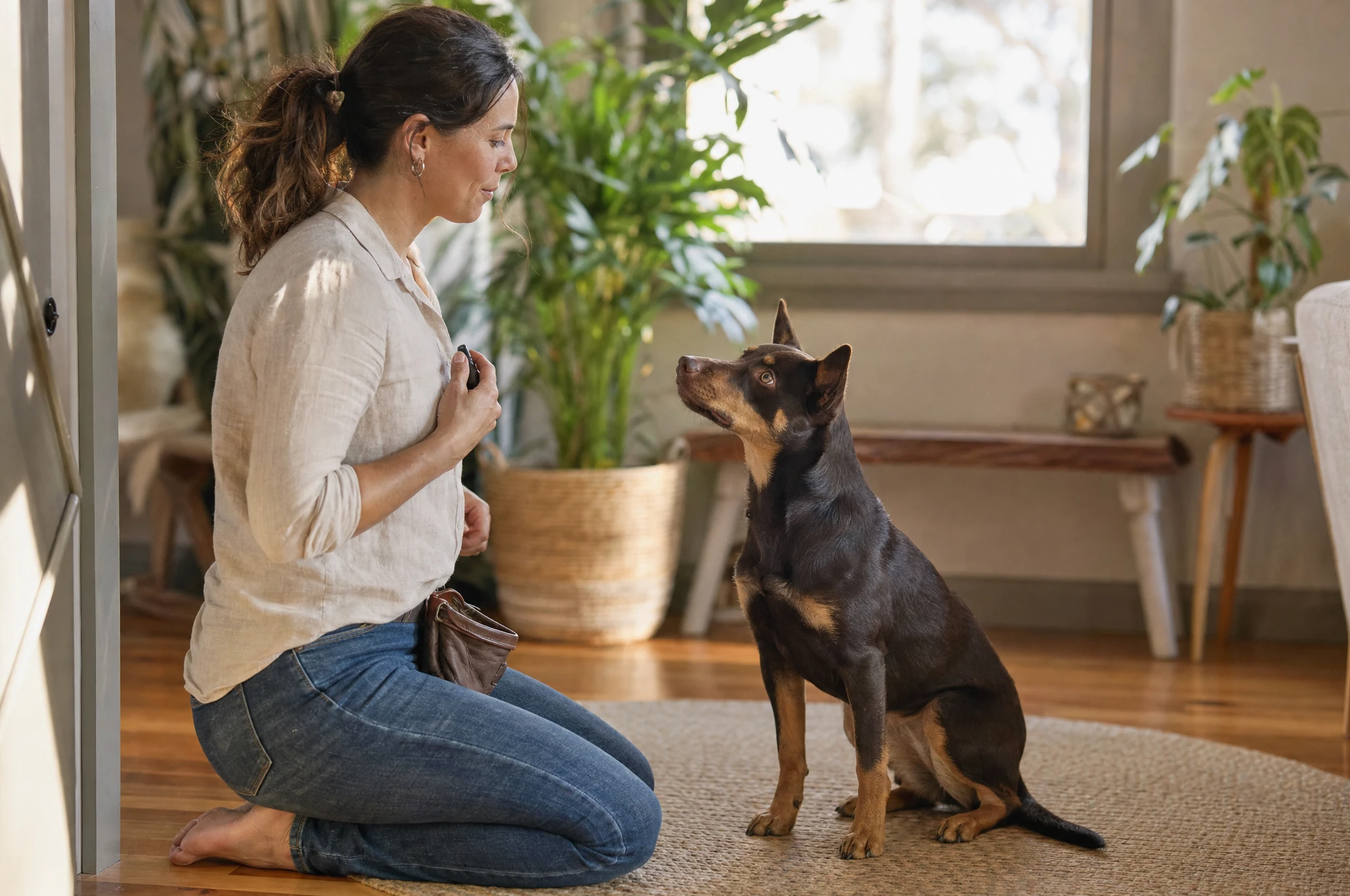
What a marker is, how to charge a clicker, and three first behaviours you can teach in short, five-minute sessions.
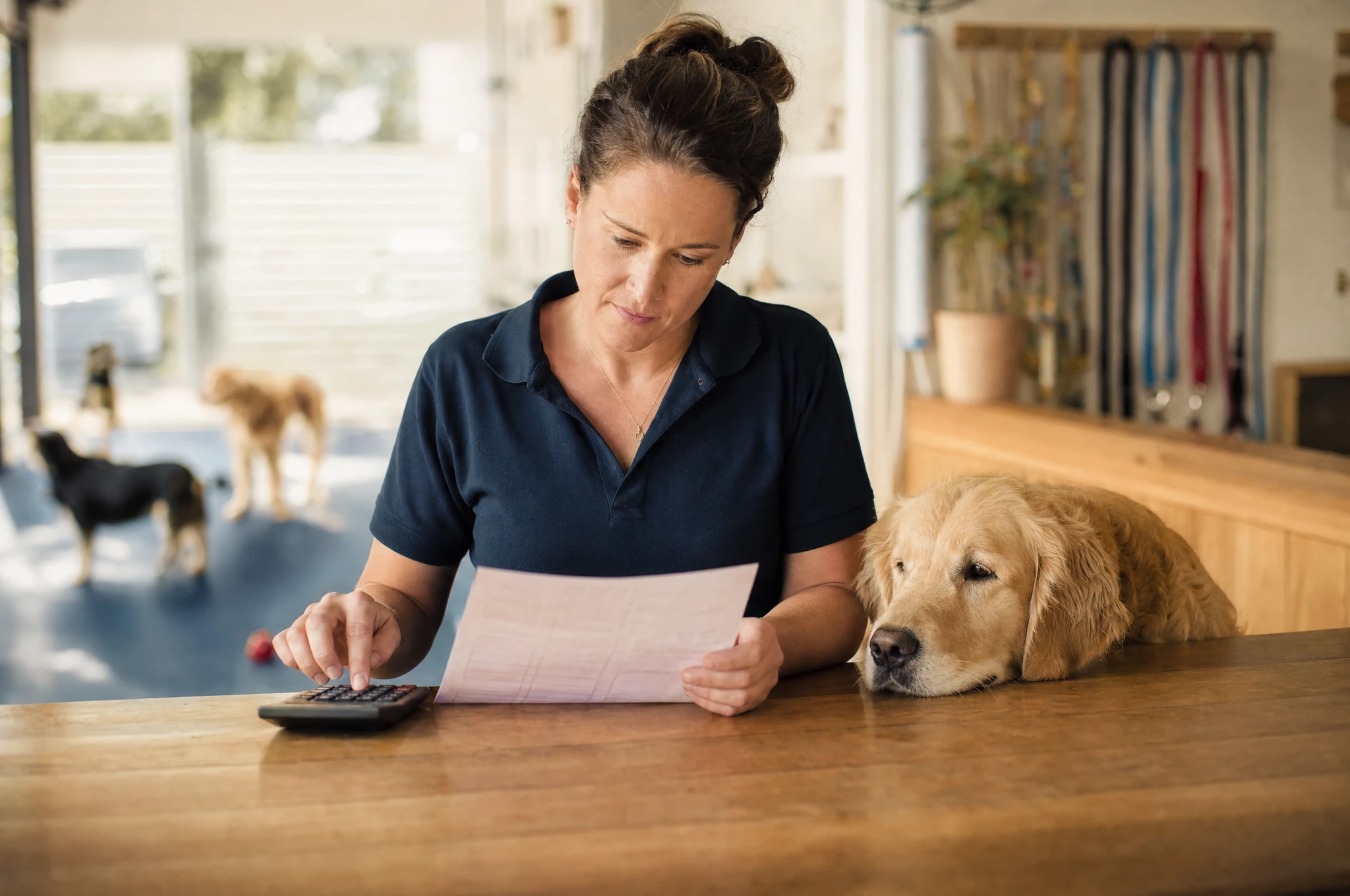
Card fees and booking fees are not the same thing. See what changed with surcharges in October 2026 and how to find your real rate.
A 30-day free trial when PackDay opens, no card. No booking fees, ever.