
Teaching a recall that works at the park
Why recall fails, how to build it step by step on a long line, and what WA law says about dogs off lead.
By the PackDay team. Checked against the sources listed at the end.
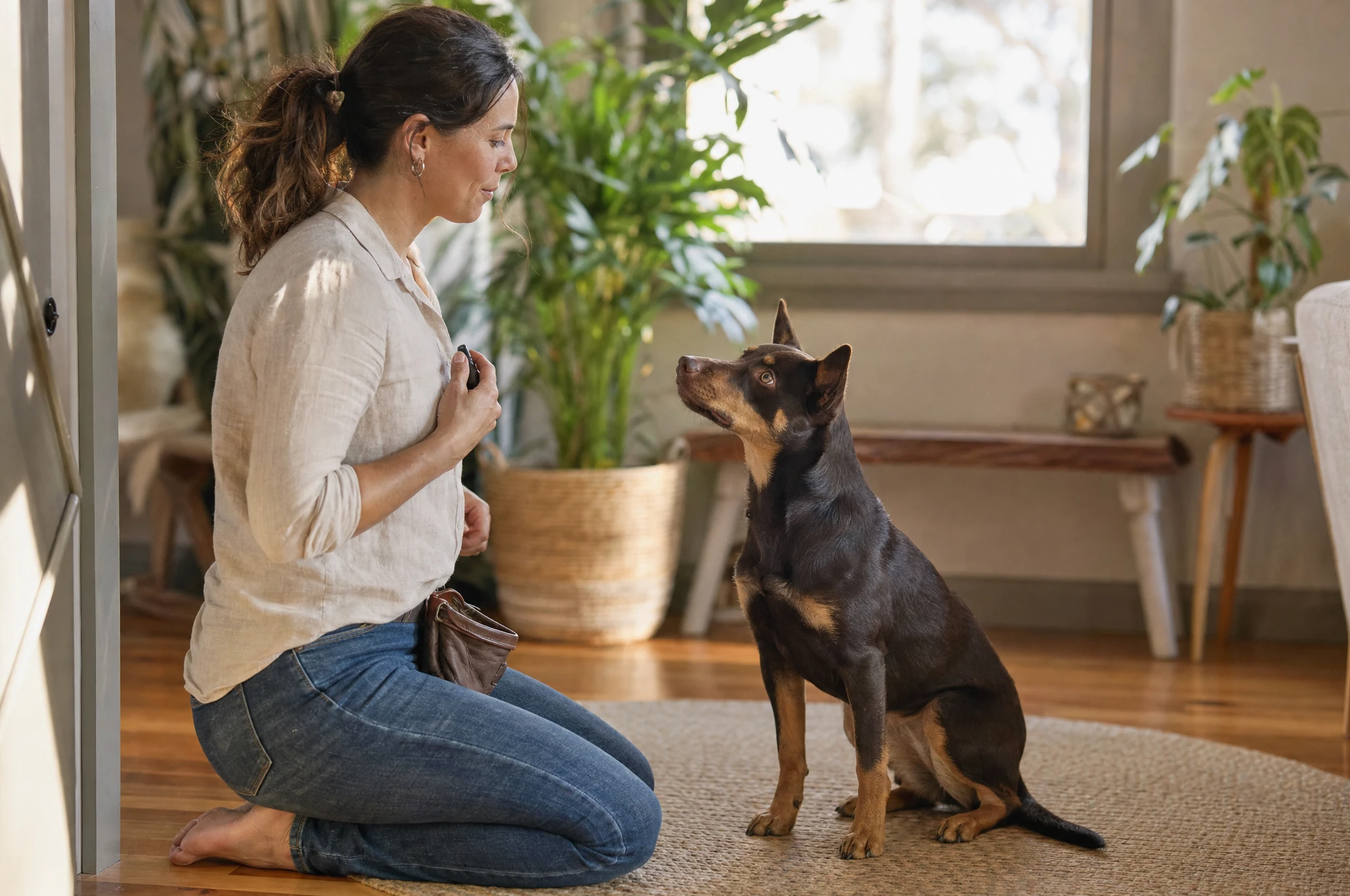
A clicker is a small tool that tells your dog “yes, that one” at the exact moment they get something right. Five focused minutes a day is enough to teach your first three behaviours.
A marker is a short, distinct signal that means “that’s it, a reward is coming”. The clicker is the best known. A word like “yes” works too, and so can a short whistle blip.
The marker solves a timing problem. Your dog sits, and by the time you’ve found a treat they’ve stood up again. The click pinpoints the moment you liked. The treat follows a second or two later.
This is positive reinforcement: behaviour that earns something good is more likely to happen again. RSPCA Australia supports reward-based training as the most humane and effective way to train dogs, and says it does not involve aversive techniques, physical punishment or asserting dominance. The American Veterinary Society of Animal Behavior (AVSAB) recommends that only reward-based methods are used for all dog training. Its position statement names a clicker or verbal marker as a normal part of that work.
One honest note. A 2016 study comparing a clicker, a spoken word and food alone found dogs learned a new task equally well in all three groups. A 2020 review found conditioned reinforcers like the click do work, but said more research is needed. So the click isn’t magic. Its value is that it helps you be precise and consistent.
Before the click means anything, your dog needs to learn that it predicts food. This is called charging, or loading, the clicker.
Click the instant the behaviour happens. Not a second later, and not while you’re reaching into your pocket. Then deliver the treat.
Two rules keep the click meaningful:
Use tiny, soft treats your dog loves, small enough to swallow in a second. The RSPCA notes that favourite treats are often small pieces of meat or cheese. Take them out of your dog’s daily food so training doesn’t mean overfeeding.
Keep sessions short. The San Francisco SPCA suggests about five minutes, two or three times a day, for teaching a hand target. A Danish study found dogs that did a single short session learned better than dogs that did three sessions back to back. More practice in one go isn’t better. Short and regular wins.
End each session with something your dog already knows, so it finishes on a success, as the RSPCA advises.
This is the foundation for everything else. Vets at UC Davis say a dog should know their name and make eye contact when they hear it before you start recall training.
This follows the method Dogs Trust recommends.
Never push your dog’s bottom down. Dogs Trust advises patience instead.
Try this tonight: charge the clicker with 20 treats, take a short break, then do two rounds of the name game with five clicks each. That’s about five minutes. Stop while your dog still wants more.
A hand target teaches your dog to touch their nose to your palm. Dogs Trust notes it helps with vet visits and grooming, and can turn your dog’s attention back to you around distractions.
You won’t always have a clicker in your hand. A verbal marker is always with you, and AVSAB lists it alongside the clicker.
A whistle works the same way. Use one short blip as your marker. If you also plan to use a whistle for recall, give that a different, longer pattern so the two never get confused.
Your dog flinches at the click. Some dogs find the sound startling. The Louisiana SPCA suggests muffling the clicker in a cloth or your pocket and unwrapping it gradually as your dog gets comfortable. You can also skip the clicker and use a soft verbal marker.
Your dog seems worried. The RSPCA lists yawning, lip licking, ears back and turning the head away among signs a dog is uncomfortable. If you see them, make the session easier and quieter.
Your dog stares at your treat hand. Keep treats in a pouch or behind your back, and keep your hands still until after the click.
In PackDay: the free clicker and whistle in Explore make the sound for you, keep count of your clicks, and suggest a next step when you’re ready.
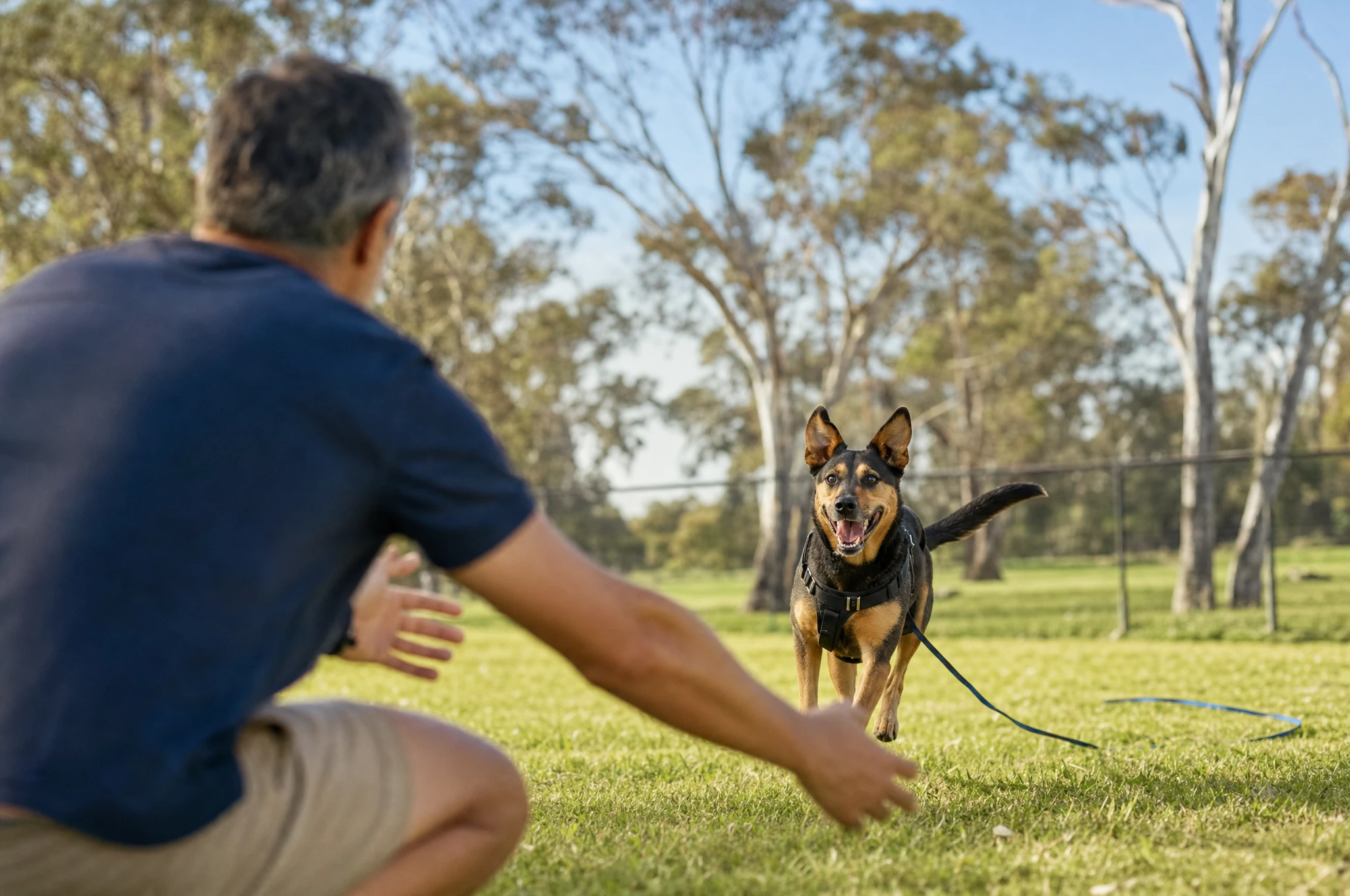
Why recall fails, how to build it step by step on a long line, and what WA law says about dogs off lead.
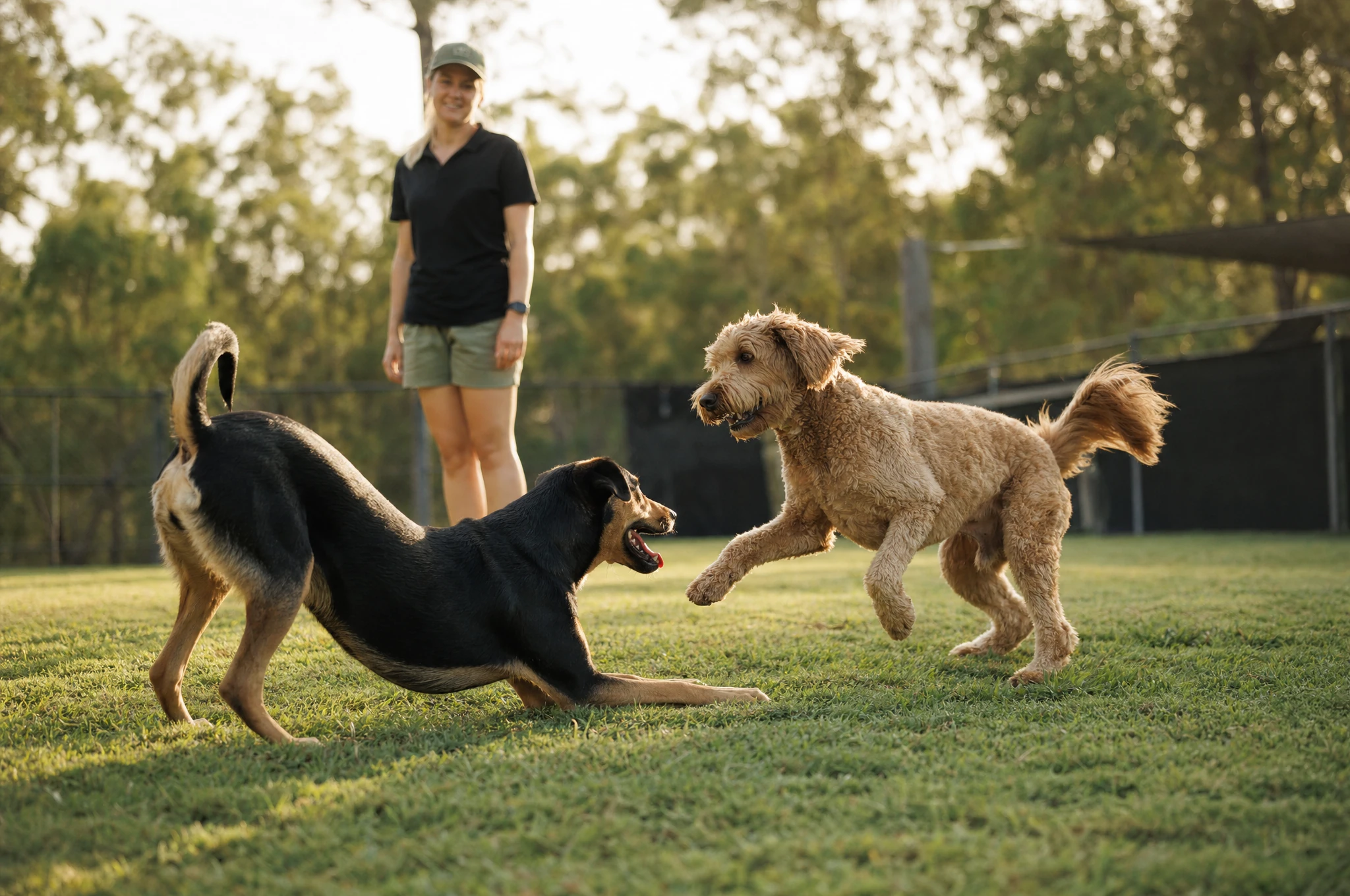
Learn to spot healthy play, early stress signals and the ladder of aggression, and how to step in calmly before play goes wrong.
A 30-day free trial when PackDay opens, no card. No booking fees, ever.